Design and Build Construction
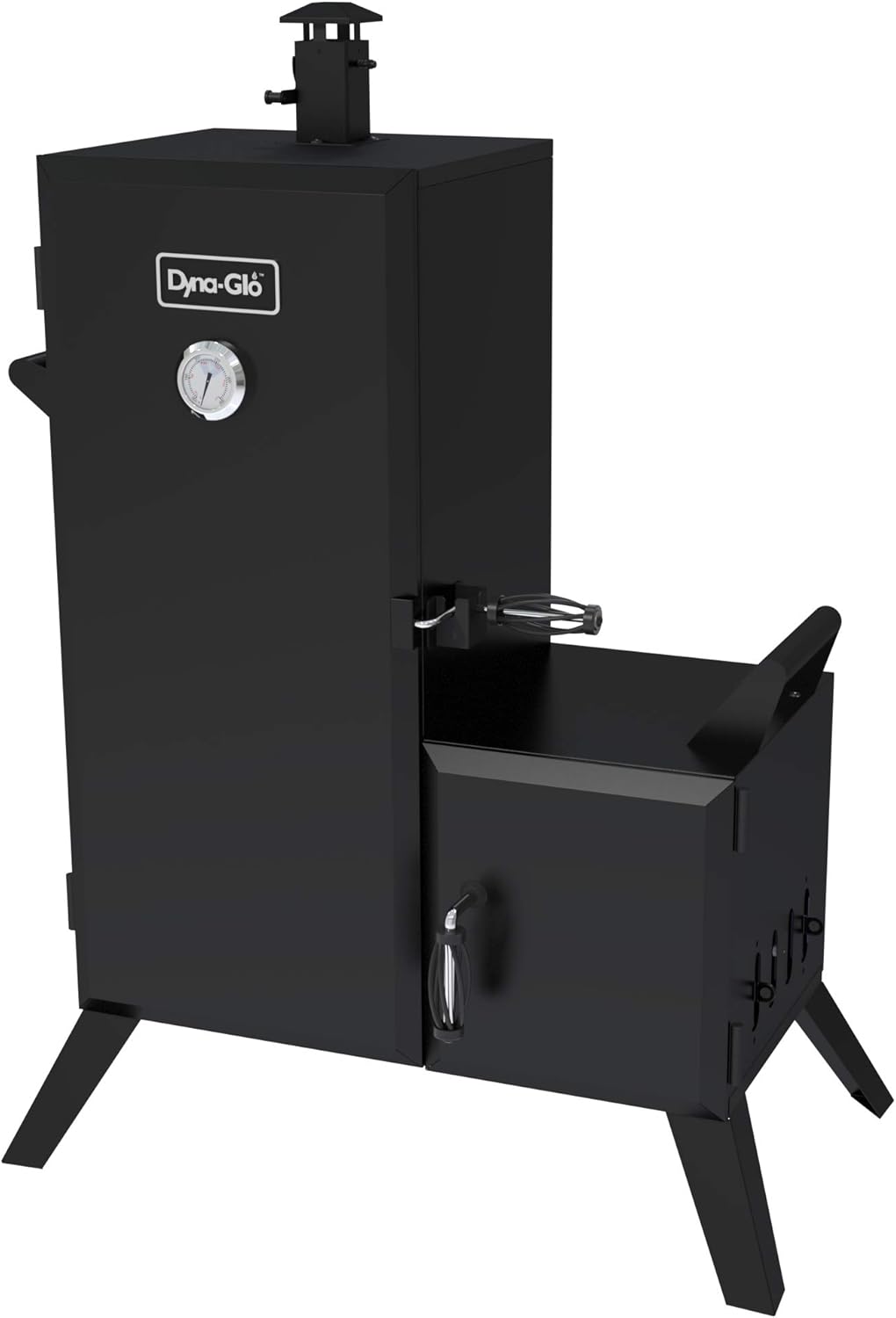
The Dyna-Glo DGO1176BDC-D stands 47 inches tall with an offset firebox configured to separate the direct heat source from the vertical smoking cabinet. While the design maximizes vertical volume, the unit scales in at 57 pounds. For a smoker measuring over 34 inches wide, this weight confirms that the manufacturer uses thin-gauge stamped sheet metal rather than heavy-gauge plate steel. In smoker design, mass directly governs heat stability. The assembly relies on bolted panels that lack integrated heat gaskets around the cabinet door and firebox lid. Smoke and heat leakage along these seams should be expected out of the box. The offset firebox houses a porcelain-enameled charcoal chamber engineered to keep briquettes compact, paired with a removable steel ash pan. The overall framework is functional for backyard hobbyists, but the light construction requires sheltered placement to perform reliably.
Real-World Thermal Performance
Operating this offset smoker requires steady attention to airflow and fuel consumption. The adjustable steel smoke stack flue and side damper allow users to regulate draft, but the thin steel hull sheds heat rapidly when ambient temperatures drop or winds pick up. Under gusty conditions, maintaining the standard 225 to 250 degree Fahrenheit range demands frequent fuel additions. The integrated stainless steel door thermometer provides only a rough estimate of the internal environment, reading temperatures high in the cabinet rather than down at the cooking grates. Buyers should deploy a dedicated two-probe wireless thermometer to track actual grate temperatures and internal meat readiness simultaneously. The porcelain-coated charcoal basket burns fuel predictably, and the offset configuration successfully prevents scorching on the lower racks, provided the fire is kept moderate and managed with hardwood chunks.
Value Assessment and Operating Cost
Priced at $211.04, this smoker offers substantial cooking volume per dollar. Delivering 1,176 square inches of total rack space across six tiers, it handles batch cooks such as multiple pork butts, sausage links, or several racks of ribs that would overwhelm compact barrel smokers at similar prices. However, true cost of ownership extends beyond the retail purchase. To match the efficiency of heavier units, buyers routinely spend additional funds on high-temperature gasket tape, food-safe silicone sealant for the seams, and an aftermarket dual-probe monitoring system. The thin steel also burns through charcoal at a faster rate than insulated or thicker-gauge alternatives, elevating operating costs over lengthy cooks. With an aggregate rating of 4.4 across 5,357 reviews, it represents a capable budget platform for cooks willing to perform basic seals.
Who Should Skip This Smoker
Pitmasters seeking set-and-forget operation should look elsewhere. Unlike pellet grills or insulated gravity-fed cabinets, this manual offset requires regular firebox management every 45 to 60 minutes. Outdoor cooks who live in consistently windy, cold, or rainy regions should also avoid this unit unless they plan to build a dedicated windbreak. Its thin metal panels lose thermal energy too quickly in sub-freezing conditions to support efficient long-duration cooking. Furthermore, individuals unwilling to apply silicone sealants or gasket tape to stop smoke leaks will find the draft regulation inconsistent. If you require welded quarter-inch steel construction designed to last decades without warping or rusting through, save up for a dedicated heavy-gauge offset pit instead of this entry-level vertical assembly.