Materials and Hardware Construction
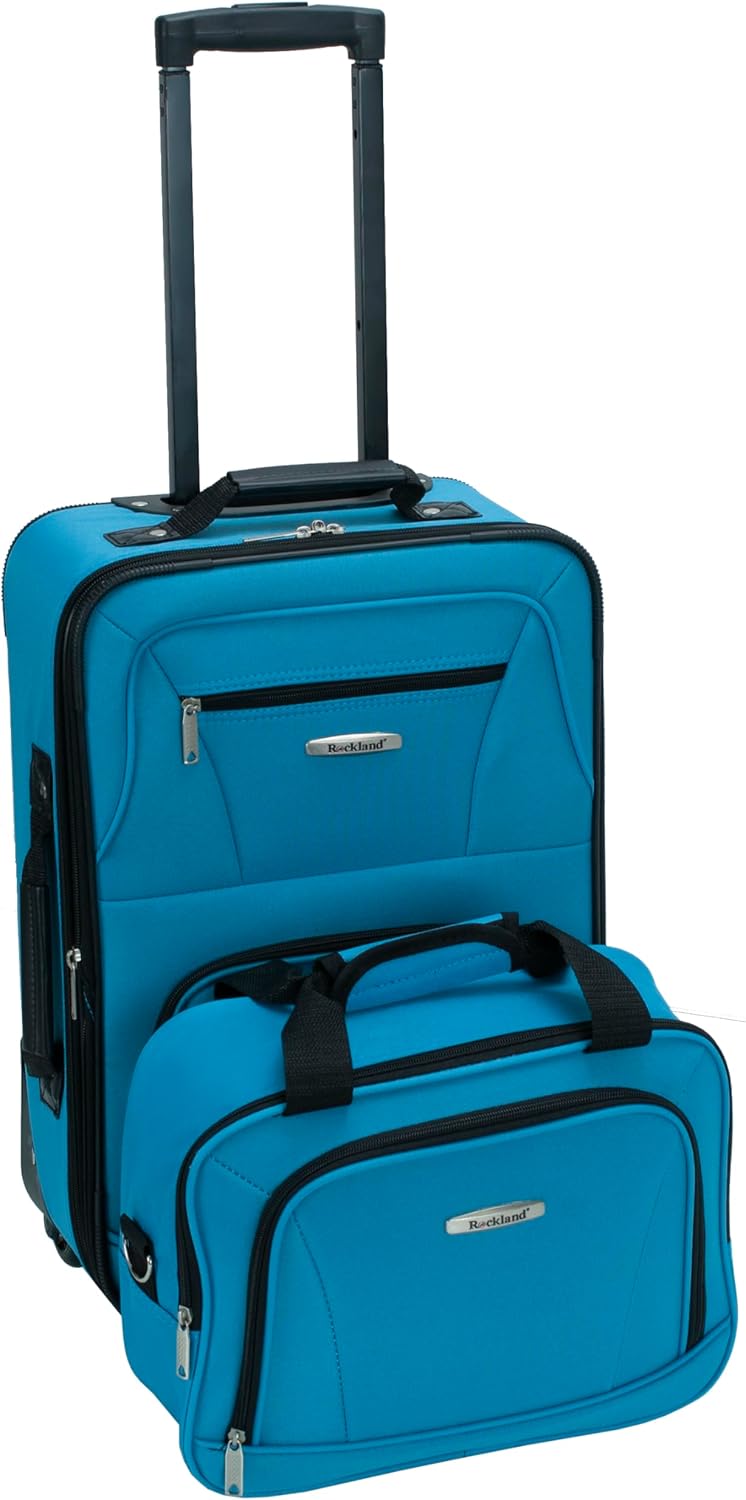
The luggage set relies on an EVA-molded high-density polyester construction reinforced with a PVC backing. While synthetic textile luggage resists surface shattering far better than brittle ABS plastic in cold temperatures, the specification notes no water resistance, meaning damp tarmac transit risks interior moisture infiltration. The upright piece incorporates two fixed inline skate wheels recessed into molded corner guards, a design that shields the rolling hardware from rough baggage handling impacts better than exposed four-wheel casters, though field servicing remains limited by standard rivet assemblies. The hardware assembly includes an aluminum telescoping handle alongside top and side comfort-grip carry points. Internal volume is rated at 38 liters (1,950 cubic inches), bolstered by an expandable perimeter zipper and ten organizational pockets spread across the upright and the complementary 14-by-11-by-5.5-inch flight tote. The included keyed padlock offers nominal deterrent value, though it lacks modern integrated TSA accessibility.
Real-World Packing and Transit Performance
Measuring 20 by 13 by 7.5 inches inclusive of the wheel assemblies, the upright comfortably meets the 22-inch exterior dimensional limits enforced by major domestic air carriers. The unladen weight of six pounds preserves adequate cargo allowance for regional flights operating under strict weight caps. In transit, the two-wheel layout requires manual tilting, relying on rearward pulling rather than effortless upright gliding. Front-mounted stability bars prevent the upright from tipping forward when packed to its 38-liter capacity, though overstuffing the expandable section can compromise forward center-of-gravity balance. The accompanying one-pound tote bag acts as an effective personal item, seating over the primary luggage handle via its rear orientation or carried separately with the detachable shoulder strap. However, travelers should note that the wheels are fixed inline units; rough gravel and high-pile airport carpeting will introduce directional resistance compared to larger, ball-bearing roller systems.
Cost Analysis and Value Proposition
Priced at $29.99, this two-piece ensemble occupies the absolute entry level of commercial travel gear. With a collective customer rating of 4.3 stars across more than 95,000 recorded reviews, user satisfaction is notably high relative to initial capital outlay. At this price point, industrial compromises are unavoidable: buyers receive traditional single-track zippers, unsealed seams, and non-replaceable running gear instead of modular, serviceable polyurethane wheels or ballistic nylon textiles. Nevertheless, acquiring both a primary overhead roller and an accessory shoulder bag for under thirty dollars provides quantifiable utility for occasional holiday flyers or college students operating under constrained budgets. Because softside polyester avoids the structural cracking vulnerabilities common to low-grade ABS plastics in chilled luggage compartments, the chassis yields reasonable longevity when spared the mechanical punishment of repeated airline checking. For modest annual usage, the overall financial return remains substantially defensible.
Limitations and Demarcation
Frequent flyers traveling multiple weeks per month should bypass this set in favor of luggage featuring serviceable hardware, sealed zippers, and ballistic nylon or virgin polycarbonate shells. Because the exterior polyester carries an explicit non-water-resistant rating, travelers anticipating heavy rain or wet ground conditions risk damaging sensitive cargo like paperwork or electronics. Business travelers who prefer the nimble lateral movement of four-wheel 360-degree spinners through narrow aircraft aisles will find the two-wheel inline skate design restrictive. Furthermore, those intending to consign this luggage to checked baggage holds should exercise caution; low-cost polyester luggage assemblies and non-TSA key locks are susceptible to conveyor-belt snagging and forced security inspection cuts. Travelers seeking warranties backed by replacement-part availability will similarly find the fixed, riveted construction inadequate for long-term maintenance, necessitating an upgrade to higher-tier luggage platforms.