Design and Build
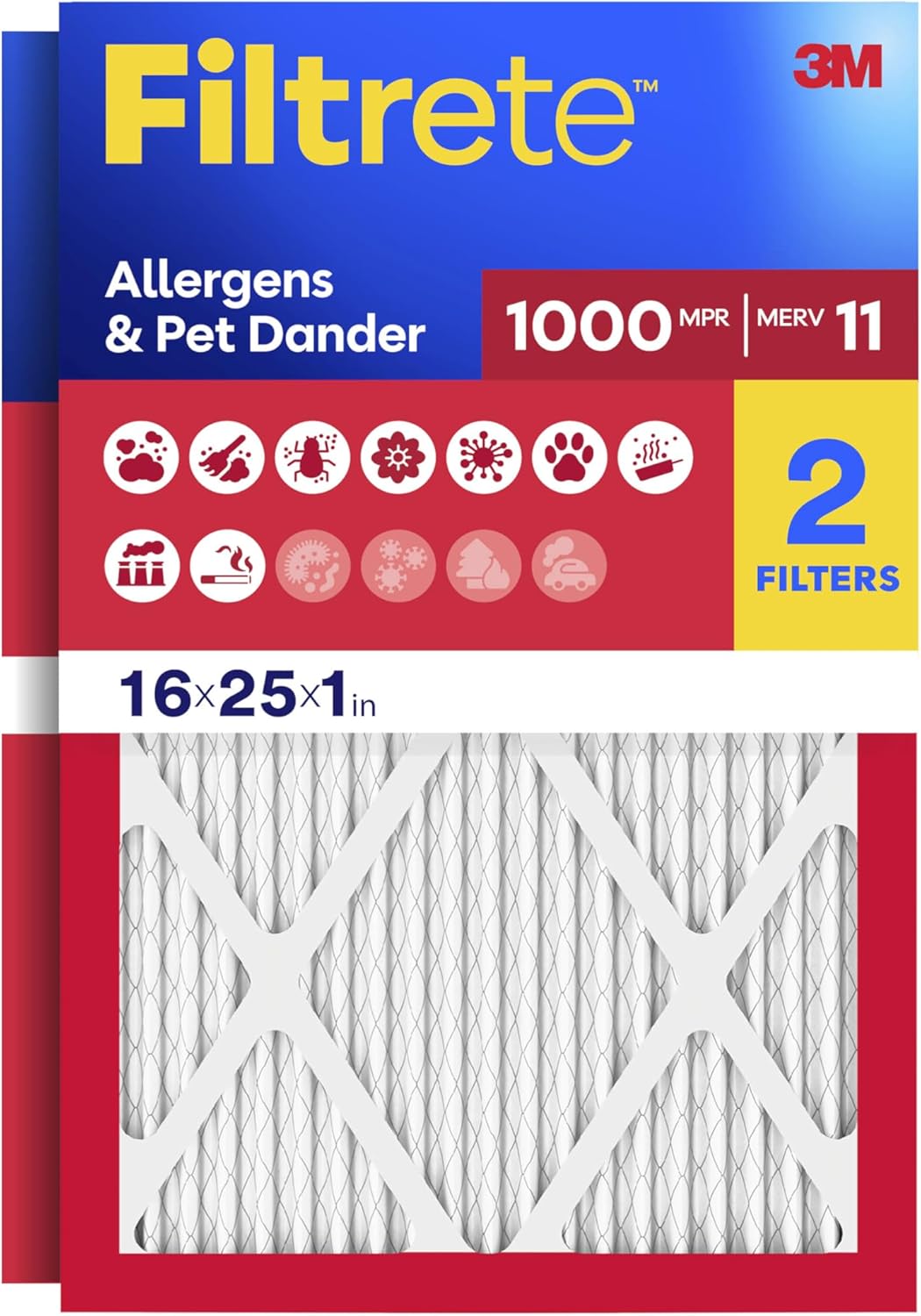
The Filtrete AD01-2PK-1E employs an electrostatically charged, pleated polypropylene media housed in a disposable rectangular slide-in casing. While marketed for nominal 16x25x1-inch slots, buyers must verify exact clearance, as the listed product dimensions suggest an outer frame profile that fits snug return grilles or furnace racks. The construction features standard pleated geometry intended to increase total surface area relative to its shallow one-inch depth. The synthetic media carries both 3M's proprietary 1000 MPR designation and an industry-standard MERV 11 rating. The unit weighs 16 ounces for the pair, reflecting lightweight, paperboard-framed residential construction designed for slide-in replacement rather than heavy-duty permanent housing. Its materials are certified asthma and allergy-friendly, indicating that the media itself does not release irritating fibrous residues into the supply ductwork during routine residential air-handler operation over its rated three-month operating cycle.
Real-World Performance
Operating at MERV 11, this filter captures particulate matter between 0.3 and 1.0 microns, including pollen, pet dander, lint, and elements of smoke or smog. However, buyers should note that residential furnace filters serve primarily to protect the air handler and cooling coils, not to substitute for dedicated standalone air purifiers. A MERV 11 filter produces higher static pressure resistance than low-density fiberglass or MERV 8 alternatives. Users must verify that their system's blower motor can overcome this static resistance without dropping airflow rates below required cooling or heating thresholds. The manufacturer recommends replacement every 90 days, though homes with high dust loading or multiple pets may experience increased pressure drop much earlier. While Filtrete promotes a barcode-scanning smartphone app for schedule reminders, the filter itself lacks physical sensors or pressure-drop monitors to indicate when airflow restriction has reached critical thresholds.
Value for Money
Priced at $21.99 for a two-count package, each filter costs roughly $11.00. Given the recommended 90-day replacement cycle, an owner will consume four filters annually, yielding an ongoing operating cost of approximately $44.00 per year. Over a three-year baseline, total filter expenditure will reach roughly $132.00, which remains economical for residential HVAC maintenance. When evaluated against standalone portable HEPA purifiers, where replacement filters often approach $50.00 to $80.00 each year, whole-house maintenance using MERV 11 media provides strong value. The product holds a 4.8 out of 5 rating across more than 58,000 recorded reviews, demonstrating consistent manufacturing tolerances and general consumer satisfaction. The pricing places it squarely between basic dust-only disposable panels and costly deep-pleat MERV 13 media, representing a sound compromise for homeowners seeking particulate reduction without overpaying for specialized mechanical framing.
Who Should Skip It
Homeowners managing severe respiratory sensitivities who require genuine HEPA performance should not rely on this filter alone. A MERV 11 media does not achieve the 99.97 percent capture rate at 0.3 microns required of true HEPA standards, which are practically unachievable in standard one-inch residential furnace slots. Furthermore, users with older HVAC air handlers fitted with low-torque PSC blower motors should exercise caution. Deploying a dense MERV 11 pleated filter in marginal duct systems can restrict system airflow, potentially causing coil freezing in summer or heat exchanger overheating in winter. Those systems are better served by lower-resistance MERV 8 filters paired with dedicated room purifiers. Finally, anyone seeking automated filter monitoring should pass; the companion smartphone application relies entirely on manual user date logging rather than optical or differential pressure sensor hardware.