Design and build
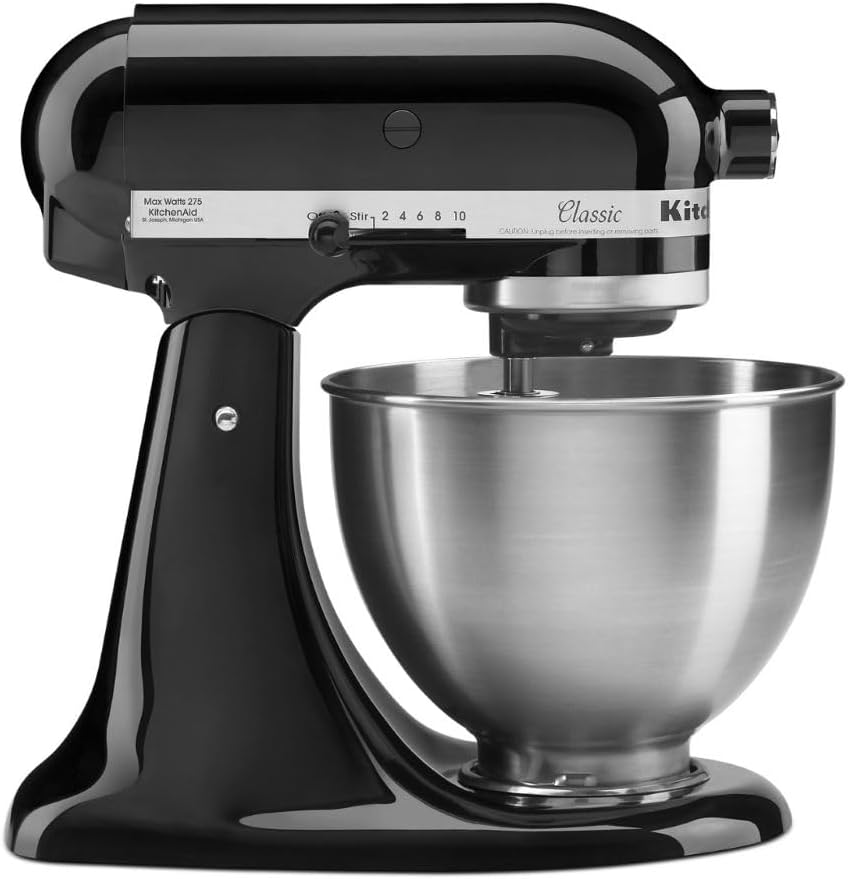
The KitchenAid Classic Series K45SS relies on a cast-metal chassis measuring 12.3 inches high, 7.8 inches wide, and 12.3 inches deep. Weighing 14.3 pounds, the machine remains planted during lighter mixing duties, though counter creeping can occur under substantial torque. The package includes a polished stainless steel bowl, a coated flat beater, a six-wire whip, and a coated C-shaped dough hook. A notable documentation issue appears in the product data: while the primary feature description lists a 4.5-quart capacity suited for medium batches, the technical specification table indicates a 3.5-quart volume. Prospective buyers should confirm the exact bowl capacity with the vendor. The manufacturer also omits the motor's exact electrical wattage rating, requiring direct verification. The tilt-head architecture enables clear overhead access to the vessel, but it introduces a mechanical hinge that serves as a known stress point during strenuous operation.
Real-world performance
Operating across 10 distinct speeds, the mixer incorporates a planetary drive system featuring 59 touchpoints per rotation. For general kitchen applications—such as creaming butter, preparing standard cookie batches, or whipping meringues—the unit performs methodically and incorporates dry ingredients smoothly. However, bread bakers face limitations. Core baking rules establish that mixer bowl-lift models handle stiff doughs that stall tilt-heads, and this machine reinforces that principle. When kneading dense flour-and-water ratios, such as those found in bagel, pretzel, or low-hydration sourdough recipes, the C-shaped hook forces dough upward while exerting lateral thrust on the head assembly. This causes the upper casing to flex against its lock mechanism. The motor shows audible strain under prolonged five- to ten-minute knead cycles, making it suitable only for soft, high-hydration sandwich loaves or enriched brioche where dough resistance remains minimal.
Value for money
Priced at $399.95, the K45SS positions itself in the mid-tier bracket for home stand mixers. A consumer aggregate of 4.8 out of 5 stars across 12,251 ratings confirms widespread satisfaction for general culinary tasks. The standard inclusion of a multi-purpose power hub, which supports over 10 auxiliary attachments like meat grinders and pasta rollers, extends functional utility beyond mere bowl mixing. Nevertheless, for the bread specialist, value diminishes rapidly. At this price point, the machine lacks an included pouring shield, which is listed as unavailable in the provided data. Furthermore, approaching the $400 threshold places this tilt-head unit in direct financial proximity to entry-level bowl-lift alternatives. If your primary objective is routine bread production, allocating four hundred dollars to an apparatus prone to head-bounce represents an inefficient use of equipment capital.
Who should skip it
Bakers dedicated to artisan sourdough, dense rye loaves, and stiff doughs should avoid the K45SS. The mechanical limitations of the tilt-head design make it prone to stalling and gear fatigue when subjected to sustained resistance. High-volume kitchens will also find the capacity restrictive, particularly given the unresolved specification discrepancy between 3.5 and 4.5 quarts, which limits batch yields to modest household quantities. Bakers seeking maximum oven spring must look to cast iron mass rather than mixer branding, and those pursuing exact fermentation ratios will benefit more from investing in a 0.1-gram scale than an underpowered mixer. If your weekly routine involves kneading two or more dense loaves at a time, skip this model and purchase a stationary bowl-lift unit engineered with rigid arms, higher-torque gearing, and superior structural endurance.