Design and build specifications
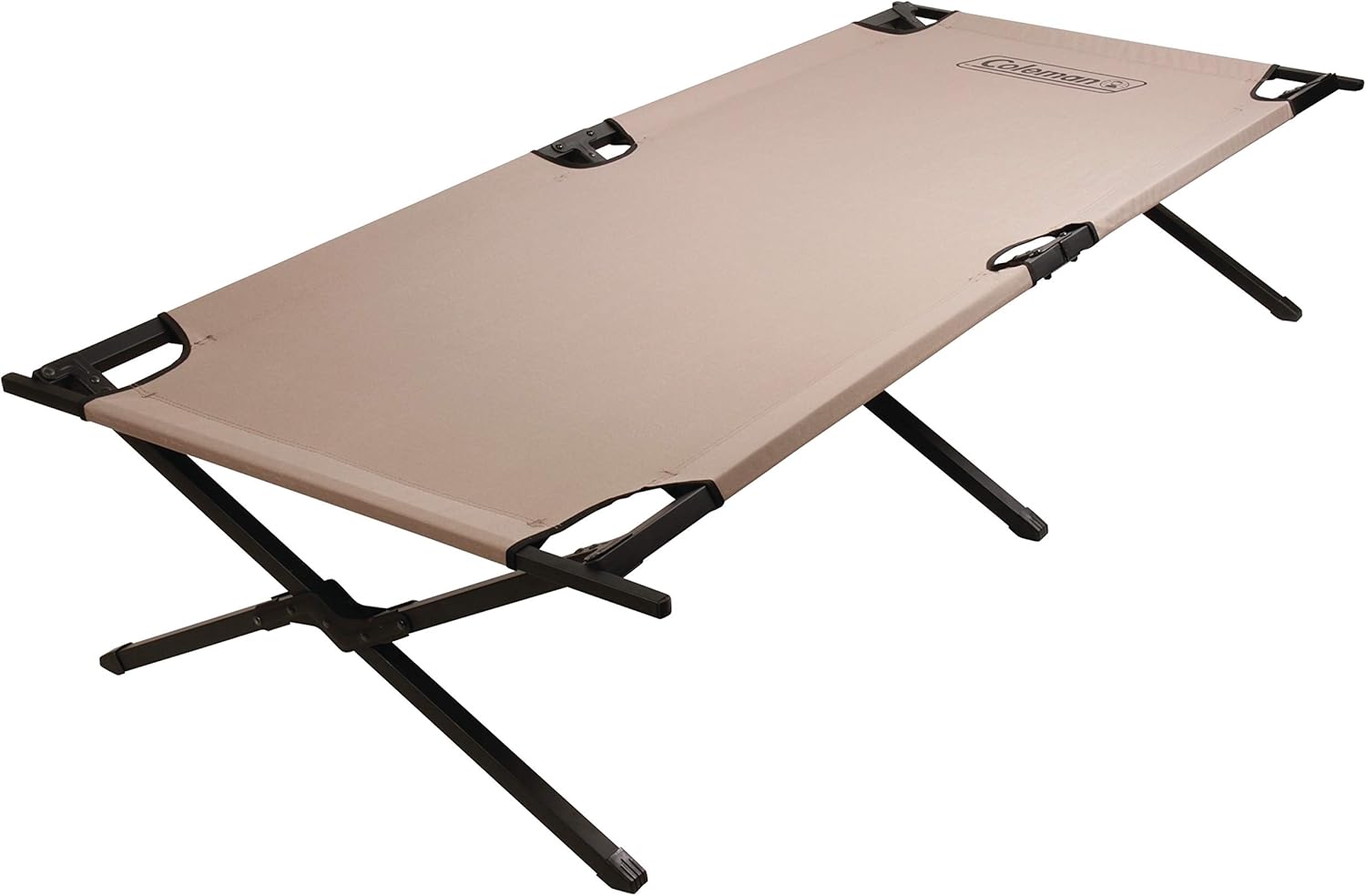
The Coleman Trailhead II utilizes an X-frame military-style folding architecture constructed from powder-coated steel tubing. Measuring 73 inches long, 35 inches wide, and sitting 17 inches off the ground, the frame is engineered to hold campers up to 6 feet 2 inches tall with a maximum static weight capacity of 300 pounds. The fabric deck is a tightly woven synthetic canvas anchored by dual end bars that slot into the perimeter frame to establish tautness. At 21.5 pounds, the unit carries substantial mass, reflecting its steel composition rather than lightweight aluminum alloys. Folded dimensions allow it to collapse accordion-style into an included transport sleeve that fits standard passenger vehicle trunks. Coleman protects the unit under a standard one-year limited warranty. Structural stress concentrates primarily on the pivot joints and the plastic feet, which buyers should verify periodically for wear if used on rough or abrasive ground.
Real-world camp performance
In the field, assembly requires moderate mechanical effort. While the side rails unfold effortlessly, seating the final end-brace onto its retention pegs requires substantial leverage, which may frustrate solo campers before the canvas stretches over time. Once locked in, the surface provides a rigid, firm sleeping plane with minimal center sag, preventing the hammock effect seen in lower-tension models. However, elevation introduces thermal challenges. While 17 inches of clearance provides valuable underneath storage inside a tent, it exposes the sleeper to ambient undercarriage airflow. Because sleeping pad R-value determines warmth far more than sleeping bag fill alone, using this cot in shoulder seasons requires an insulated pad placed directly on the deck. Without a pad to mitigate convective heat loss, cold air circulating below the fabric pulls body heat downward rapidly, regardless of whether a heavy sleeping bag is utilized above.
Value and market positioning
Priced at $54.99, the Trailhead II sits firmly in the entry-tier segment of elevated camp furniture. Backed by a 4.4 out of 5-star aggregate rating across nearly 25,000 user reviews, it demonstrates proven mechanical reliability among budget-conscious vehicle campers. Higher-end camp cots from technical brands often exceed $150 to $250, primarily to achieve lower weight thresholds through the use of DAC aluminum poles and proprietary lever-locking hubs. The Trailhead II foregoes weight optimization entirely, opting for heavy steel components that keep manufacturing costs down while maintaining a dependable 300-pound load threshold. For car campers, seasonal deer hunters, and hosts needing an emergency residential cot, the price-to-utility ratio is exceptionally high. The main compromise remains ergonomics during tensioning, where budget tolerances demand brute force over smooth, mechanical lever assistance found on costlier alternatives.
Who should look elsewhere
Backpackers and self-supported human-powered travelers should completely avoid the Trailhead II. Because packed weight, not trail weight, is what you carry, hauling a 21.5-pound cot on anything beyond a walk from the trunk to the campsite is fundamentally impractical. Campers taller than 6 feet 2 inches will find their heads or feet pressing hard against the rigid steel cross-bars at the perimeter, resulting in severe comfort deficits during the night. Additionally, individuals with limited hand strength or wrist mobility should skip this model, as tensioning the terminal cross-bar demands brute levering power that can prove difficult without assistance. Campers operating inside low-profile backpacking tents must also look elsewhere; the 17-inch platform height requires a tall cabin-style or four-person dome tent to ensure occupants can sit up without their heads driving into the shelter roof canopy.