Design and Build Quality
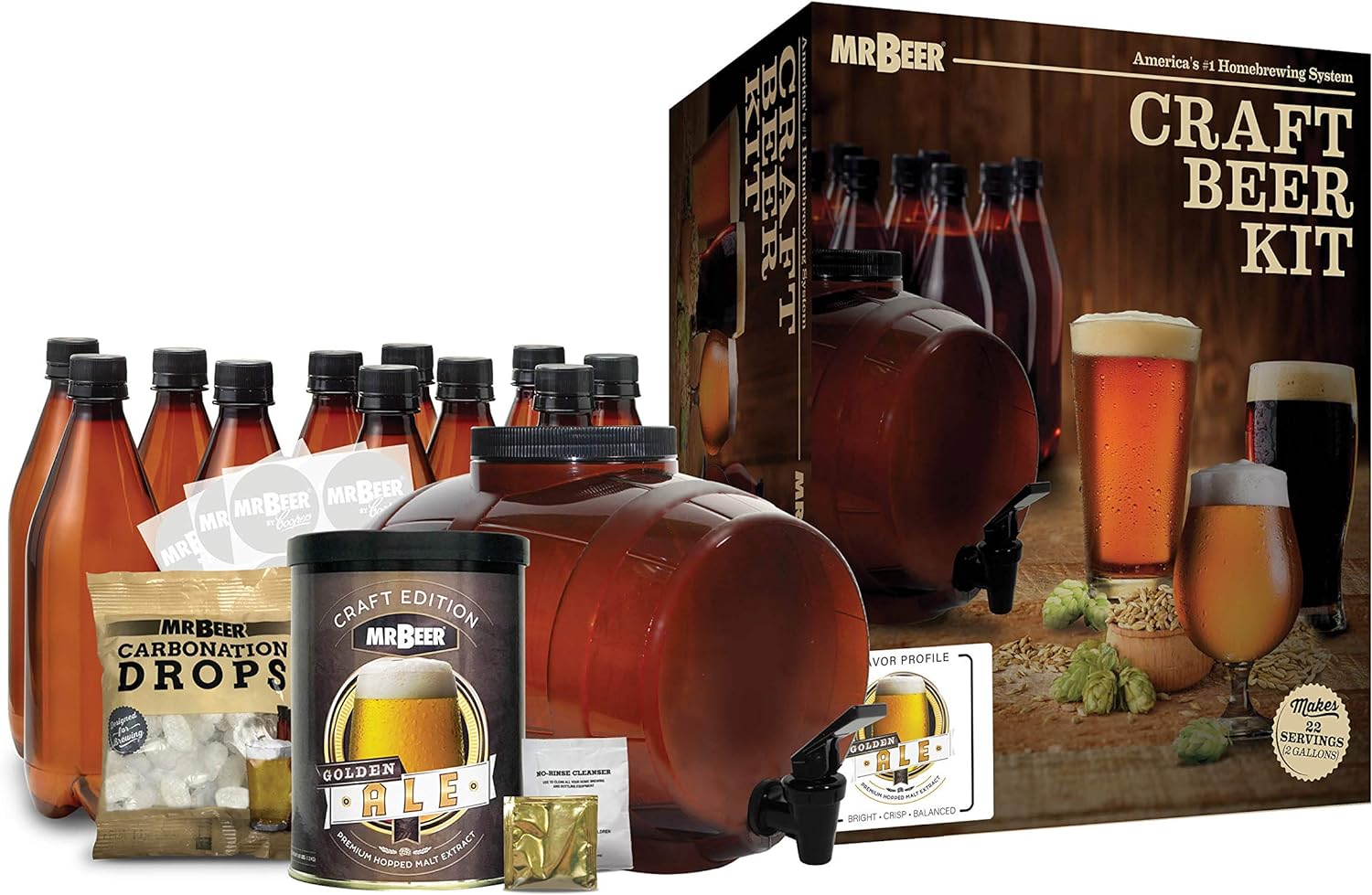
The Mr. Beer system centers around a lightweight, two-gallon plastic fermenter modeled after an oak barrel. Accompanied by eleven 25-ounce reusable plastic bottles and carbonation drops, the kit avoids the fragility of glass. While this plastic construction lowers shipping costs and keeps the retail price at $59.95, it sits far below the operational standard of stainless conical fermenters. Dedicated conical vessels simplify yeast harvesting and trub removal without introducing oxygen, whereas this small plastic keg relies on an internal wide-mouth opening and standard spigot. Plastic is also inherently prone to microscopic surface abrasions during cleaning, which can harbor wild bacteria over consecutive cycles. The design is tailored for basic kitchen counter placement rather than long-term durability. Prospective buyers should inspect the spigot seal and threading closely before batch initiation, as any compromise in the plastic moldings can cause slow fluid leaks or unwanted air ingress during primary fermentation.
Real-World Performance
Preparation is straightforward, requiring roughly thirty minutes because the Golden Ale malt extract from Coopers Brewery is pre-hopped. This eliminates the standard sixty-minute wort boil and hop scheduling required by traditional all-grain setups. However, real-world fermentation reveals the kit's core physical limitation: ambient exposure. Brewing doctrine dictates that temperature control during fermentation outranks every ingredient. Without active cooling jackets or insulated walls, the small two-gallon liquid volume easily shifts alongside ambient room fluctuations. Unchecked temperature spikes can lead to undesirable fusel alcohols and esters that compromise the intended clean profile of the Golden Ale. Fermentation requires ten to fourteen days, followed by another seven to fourteen days of bottle conditioning using the supplied carbonation drops. Cleanliness remains critical throughout; while basic instructions are included, buyers should invest in dedicated, no-rinse brewing sanitizers beyond the starting packet, as rigorous sanitation is the sole barrier against batch spoilage in unsealed plastic setups.
Value for Money
Priced at $59.95, this kit functions as a low-cost entry point into homebrewing, reflected in its aggregate rating of 4.4 out of 5 stars from over 4,800 customer evaluations. The package provides all mechanical components required to turn liquid extract into bottled ale, dispensing approximately twenty-two 12-ounce equivalents across the eleven supplied 25-ounce bottles. When evaluated on pure hardware, the value proposition is acceptable though narrow. The bottles, caps, and fermenter amortize over multiple runs, but ongoing brewing requires recurring extract refills or custom malt purchases. Furthermore, the omitted essentials—namely a reliable digital thermometer, hydrometer for measuring specific gravity, and supplementary sanitizing chemicals—add immediate secondary expenses to the base purchase price. For those merely testing their curiosity without committing hundreds of dollars to dedicated kettles and fermentation chambers, the initial outlay remains financially sensible.
Who Should Skip It
Experienced brewers and individuals serious about craft quality should bypass this kit in favor of modular all-grain equipment. The reliance on pre-hopped extract denies the brewer any ability to adjust hop additions, water chemistry, or mash profiles. Anyone lacking a cool, temperature-stable closet or dedicated fermentation chamber should also pause; without thermal regulation, the yeast will struggle to produce clean beer in warmer climates. Additionally, those who prioritize sanitary longevity will find the plastic fermenter inadequate compared to stainless steel conical vessels, which cleanly separate sediment and resist surface scratching. If your intention is to understand the complete biochemical process of mashing grains and fine-tuning hop bitterness, or if you demand precise gravity readings and temperature stability, this closed-loop beginner system will feel restrictive after a single production cycle.