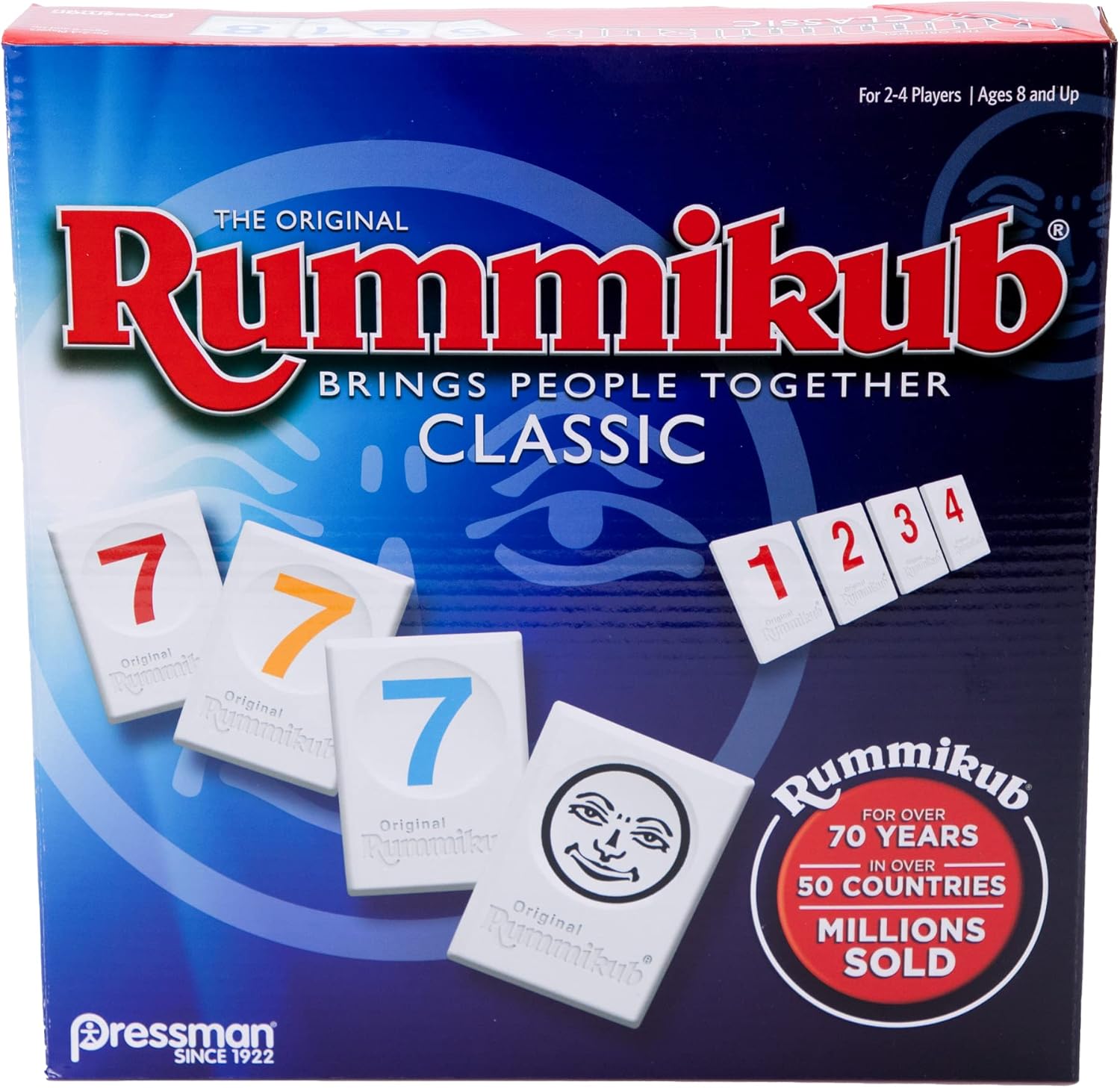
Design and build quality
The standard Pressman edition includes 106 plastic numbered tiles, four three-tiered plastic display racks, and a single folded instruction sheet. The tiles are molded with indented, painted numerals across four standard colors, which prevents the digits from rubbing off during regular shuffling. However, the plastic is lightweight rather than premium resin or bakelite, resulting in a hollow tactile response when arranging sets on a table. The four included player racks consist of single-piece molded plastic that can become unstable if bumped, particularly on slick surfaces. Storage is a clear weak point: the cardboard box features a minimal plastic insert that fails to hold the tiles securely once unpunched or bagged. Tabletop players who value fast setup should plan to source a custom cloth draw-bag and internal sorting containers, as the retail packaging offers virtually no assistance in keeping the 106 loose pieces organized between gaming sessions.
Real-world performance and player scaling
On the table, Rummikub functions as a dynamic logic puzzle focused on pattern recognition and set manipulation. While the manufacturer lists the player count as two to four, the sweet spot sits firmly at three participants. At two players, the tile pool is depleted slowly, often turning rounds into defensive, slow-paced stalemates where neither player wants to break open the board. At four players, the board state morphs drastically between turns, which frequently triggers analysis paralysis and disrupts table momentum as players recalculate complex rearrangements. With three players, tile turnover maintains a steady rhythm without dragging turn lengths down. The initial meld requirement of thirty points can occasionally strand a player who suffers a run of low-value draws, injecting an unavoidable element of luck. Once tiles hit the common pool, however, the ability to dissect and reconstruct existing sets rewards analytical planning and forward spatial tracking.
Value for money and expansion necessity
Priced at $19.70 with an aggregate rating of 4.8 across more than 35,000 consumer reviews, this release sits firmly in the budget family category. Unlike modern hobby board games that depend on expansions to patch balance issues or extend gameplay variety, Rummikub is entirely self-contained. The core ruleset has remained essentially static for decades because the basic mathematical constraints of forming runs and groups require no supplemental card packs or expansion boards to stay engaging. Purchasing decisions do not need to account for hidden add-on costs, as there are no official modular expansions necessary to experience the game as intended. Potential buyers should weigh the low entry cost against the utilitarian component quality. Premium large-number or retro wooden editions exist at higher price points, but for pure functional play, the base retail box covers all required mechanical territory without ongoing financial investment.
Who should skip it
Hobbyists seeking thematic immersion, narrative progression, or modern Euro-style engine building should bypass Rummikub entirely. The game is an abstract mathematical exercise with zero thematic dressing; players purely manipulate numbers, colors, and jokers. Those sensitive to downtime will also find four-player matches frustrating when paired with opponents prone to overthinking multi-tile board rearrangements. If your gaming group dislikes randomness in opening hands, the initial draw can occasionally generate rounds where a player is mathematically locked out of making a legal opening move for multiple turns. Additionally, anyone demanding premium tactile components, such as weighted ceramic tiles or solid wood display troughs, will be disappointed by the lightweight plastic found in this mass-market Pressman printing. Dedicated tabletop groups with dedicated storage systems will likely find the rudimentary cardboard packaging and lack of an included tile bag irritating during regular rotation.