Best Whiskey Glasses: What to Buy and Why
No whiskey glasses in our current reviews qualify as a recommendation, but this guide explains the shapes, materials, and sizes worth choosing.
By the Niche Picks editorsUpdated October 7, 20269 min readDrawn from our 30 research-based wine & spirits tools reviews
Short answer
There are no whiskey glasses in our current reviewed selection, so we cannot responsibly name a best buy. For most people, choose a clear, stable glass with enough room to swirl a 1.5- to 2-ounce pour; a Glencairn-style nosing glass suits neat whiskey, while a heavy rocks glass suits whiskey over ice. Avoid treating wine glasses, decanters, aerators, or bottle accessories as substitutes.
Key takeaways
- No currently reviewed product is a whiskey glass, so this shortlist intentionally has no product winners.
- A tulip-shaped nosing glass concentrates aroma and is the most versatile choice for neat whiskey tasting.
- A rocks glass with a broad base is the practical choice for whiskey served over a large cube or in stirred cocktails.
- Rim shape, comfort, clarity, and stability matter more than decorative cuts or oversized capacity.
- Whiskey does not require a decanter, aerator, wine fridge, or wine stemware to be enjoyed properly.
What are the best whiskey glasses to buy?
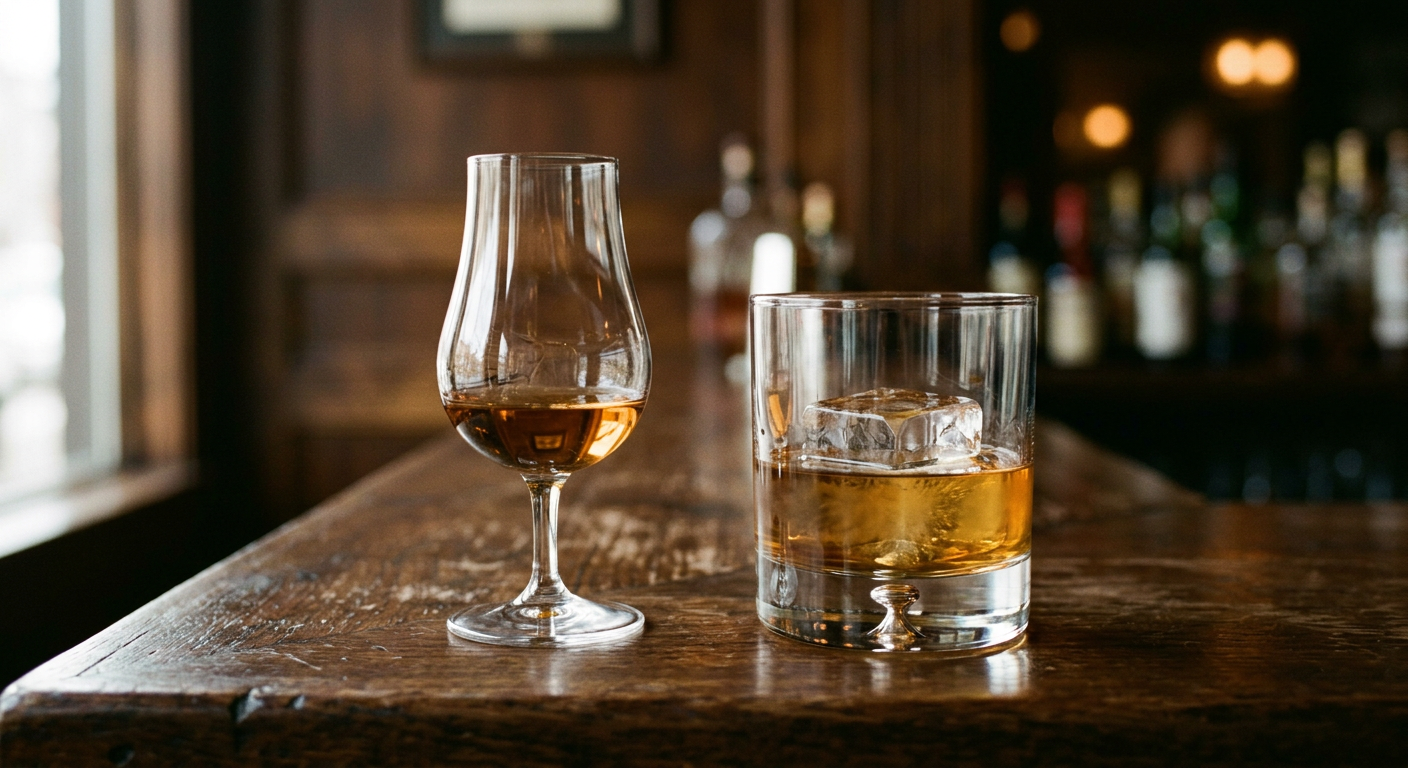
The best whiskey glass depends on how you actually drink whiskey. Buy a tulip-shaped nosing glass if you usually sip bourbon, rye, Scotch, Irish whiskey, or Japanese whisky neat. Its narrower opening gathers aromas while the bowl leaves room to swirl a modest pour. Buy a low, broad rocks glass if you commonly add a large ice cube, make an Old Fashioned, or prefer a casual everyday tumbler.
We have not named a product winner because our current Wine & spirits tools reviews do not include any whiskey glasses. The reviewed glassware is wine-specific, and the other relevant-looking items are decanters, aerators, pourers, and refrigeration products. None is a like-for-like substitute for a proper whiskey tumbler or nosing glass. See all our available Wine & spirits tools reviews for the current coverage boundaries.
Use this quick match before shopping:
- Neat pours and aroma exploration: tulip or Glencairn-style glass.
- A splash of water: tulip glass with a bowl large enough to swirl gently.
- One large cube or sphere: 8- to 12-ounce rocks glass.
- Old Fashioned and other stirred drinks: straight-sided or gently tapered rocks glass.
- Hosting several drinkers: buy matching sets of four or six, plus at least one durable backup.
A good whiskey glass should feel balanced in your hand, sit securely on the table, and have a rim that feels smooth and unobtrusive. Decorative styling is personal; functional shape is not.
Which whiskey glass shape is right for neat pours, ice, and cocktails?
Glass geometry changes how whiskey reaches your nose, how easily you can add water or ice, and how convenient the drink is at the table. It does not change what is in the bottle, but it can make aromas easier or harder to notice.
A tulip-shaped whiskey glass has a rounded bowl and a narrower mouth. This concentrates volatile aromas near the opening, making it useful when comparing pours or slowing down with a neat dram. It is generally the most purpose-built format for tasting. Do not fill it high: a smaller pour leaves the headspace needed for aroma.
A rocks glass, also called an Old Fashioned glass, has a wide opening and a short, sturdy profile. The shape accommodates ice well and makes stirring or building a cocktail straightforward. It is less aroma-focused than a tulip design, but it is the more flexible social-drinking glass.
A highball is for long drinks rather than neat sipping. Choose it for whiskey and soda, a highball-style mixed drink, or other recipes with a large volume of chilled mixer. A narrow whiskey pour alone can look lost in one.
Think of a decanter as a serving vessel, not a replacement for the glass you drink from. Our explainer on what a wine decanter does covers the general role of a decanting vessel, but its advice should not be confused with whiskey-glass selection. Whiskey drinkers who value aroma should put their budget into the drinking glass first.
What material should a whiskey glass be made from?
For everyday whiskey, clear glass or lead-free crystal are the sensible materials to compare. Both let you see color and clarity, and both can be formed into practical rocks or tulip shapes. The better choice comes down to the exact glass's rim, weight, durability guidance, and price—not the word “crystal” alone.
Lead-free crystal is often chosen for visual clarity and the potential for a refined, thin-feeling rim. But thin glass can be more vulnerable to chips or breakage, particularly around the rim and stemless base. Ordinary glass can feel sturdier and is often a better fit for households where glasses move frequently from cabinet to dishwasher to outdoor table. Follow the maker's care instructions for the exact model rather than assuming any glass is dishwasher safe.
Avoid opaque, heavily patterned, or deeply cut designs if your goal is serious tasting. They can be attractive, but clear walls make it easier to judge the whiskey's color and watch dilution as ice melts. Deep cuts can also make the exterior harder to wipe dry.
Weight deserves a practical check. A heavy-bottomed rocks glass can feel reassuring and stable with ice, but excessive weight does not improve flavor. Conversely, an extremely light tulip glass may feel elegant but needs more careful handling. Hold a similar shape before committing to a large set whenever possible.
For more category-wide shopping advice, see our Wine & spirits tools buyer's guide. It is especially useful for separating durable essentials from accessories that add clutter without solving a real serving need.
How big should a whiskey glass be?
Capacity should suit the serving style rather than encourage an oversized pour. A standard serving of whiskey is often 1.5 to 2 ounces, so even a modest glass leaves substantial headspace. That open room matters: it allows you to swirl without spilling and, for a neat pour, gives aromas space to collect.
For neat whiskey, a smaller tulip-style glass is usually sufficient because the drink itself occupies little volume. The important feature is bowl space above the pour, not maximum capacity. A glass that is too tall or wide can make a small neat serving feel visually insignificant, while a very narrow opening may make nosing feel overly intense.
For ice, choose a rocks glass wide enough for the ice format you use. A large cube or sphere needs a broad base and enough wall clearance that it does not jam against the rim. An 8- to 12-ounce tumbler is a common practical range for a whiskey pour, a large cube, and a small amount of dilution, though exact needs vary by cube size and preferred recipe.
For cocktails, check the finished drink volume rather than the spirit measure. An Old Fashioned needs room for whiskey, sugar or syrup, bitters, ice, and stirring. A highball needs considerably more room because the mixer is the majority of the drink.
Do not buy a giant glass solely to make whiskey “breathe.” Swirling can increase surface exposure, but glass shape and serving preference matter more than excess empty volume. The same disciplined approach applies when comparing accessories in our buying tips: purchase capacity for the job, not for a marketing claim.
Do whiskey stones, decanters, and aerators improve the drink?
They can change service, but none is required for good whiskey. Start with a glass that fits your preferred pour. Then decide whether an accessory solves a specific problem you actually have.
A decanter is mainly a presentation and storage choice for whiskey. Unlike wine, whiskey is already a stable distilled spirit when bottled, so it does not need decanting to manage sediment or develop in the same way. If you transfer whiskey, use a clean vessel with a well-fitting stopper and keep it away from heat and direct light. Do not assume any decorative decanter is suitable for indefinite storage without checking its material and closure instructions.
An aerator introduces air during pouring. Some drinkers enjoy experimenting with a few minutes of resting or a splash of water, but an aerator is not an essential purchase and cannot compensate for a poorly chosen glass. Wine-focused aerators and decanters in our coverage are not whiskey-glass recommendations; readers interested in those tools can consult the best wine decanters.
Whiskey stones can chill a drink with less dilution than ice, but they also provide less cooling capacity than ice and can strike the glass if handled carelessly. If you like whiskey cold, a single large, clean ice cube is the simpler option for most people. It cools efficiently and adds water gradually, which may soften the impression of alcohol.
A few drops of still water are another option for neat whiskey. Add slowly, taste, and stop when the balance suits you. There is no universal correct ratio.
What mistakes should you avoid when buying whiskey glasses?
The biggest mistake is buying a glass based on appearance alone. A handsome heavy tumbler may be excellent for an Old Fashioned but poorly suited to exploring the aroma of a neat single malt. Likewise, a delicate tulip glass can be ideal for tasting but awkward with a large cube and orange peel.
Avoid these common missteps:
- Buying wine glasses because they look refined; wine stemware is designed around wine's different serving temperatures and bowl shapes.
- Choosing very thick rims when a smooth, fine drinking edge is available within your budget.
- Buying a set before checking height, width, cabinet clearance, and dishwasher-rack fit.
- Assuming “dishwasher safe” means every wash cycle is equally gentle; heat, crowding, and contact with other items can still cause damage.
- Choosing cut-glass decoration that obscures color when you want to evaluate whiskey visually.
- Confusing a decanter, aerator, pourer, or speed spout with a drinking glass.
- Paying extra for claims that do not state an exact material, capacity, care instruction, or set count.
If you are giving glasses as a gift, a set of two is suitable for a couple or focused tasting; a set of four is more useful for regular entertaining. One matching shape is usually better than a mixed novelty set because it gives every guest the same experience.
Before checkout, compare the exact listing details and return terms. Our mistakes to avoid page has a broader checklist for barware purchases, and the comparison tool can help organize price, material, and set-size differences once eligible whiskey-glass reviews are available.
Quick checklist
- Decide whether you primarily drink whiskey neat, with water, over ice, or in cocktails.
- Choose a tulip-shaped nosing glass for aroma-focused neat pours or a rocks glass for ice and stirred drinks.
- Confirm the glass has enough headspace for your usual pour and preferred ice format.
- Check the exact material, set quantity, dimensions, and care instructions before buying.
- Measure cabinet shelves and dishwasher-rack clearance for taller or wider designs.
- Look for a stable base and a smooth rim rather than prioritizing decoration.
- Avoid buying wine accessories or wine stemware as substitutes for whiskey glasses.
Frequently asked questions
- What is the best type of glass for sipping whiskey neat?
- A tulip-shaped nosing glass is generally the best format for neat whiskey because its rounded bowl gives the liquid room to swirl and its narrower opening concentrates aroma. Use a modest pour so there is headspace above the whiskey. A rocks glass still works for casual neat drinking, but it is less focused on aroma.
- Are rocks glasses good for whiskey?
- Yes. Rocks glasses are especially good for whiskey over a large cube, an Old Fashioned, and relaxed everyday pours. Look for a stable base, enough width for your chosen ice, and a comfortable rim. Their broad opening is convenient for ice and garnishes, although it generally concentrates aromas less than a tulip-shaped glass.
- What size whiskey glass should I buy?
- Choose the size around your serving style. For neat whiskey, prioritize a bowl with headspace rather than a huge stated capacity. For ice or an Old Fashioned, an 8- to 12-ounce rocks glass is often practical because it leaves room for a 1.5- to 2-ounce pour, ice, and stirring without crowding the rim.
- Do whiskey glasses really change the taste?
- A glass cannot change the whiskey itself, but shape can change aroma concentration, pouring comfort, and how the drink reaches your palate. A narrower tulip opening emphasizes nosing, while a broad rocks glass is more accommodating for ice. A smooth, unobtrusive rim and a shape appropriate to the drink usually matter more than decorative styling.
- Should I use a decanter for whiskey?
- A decanter is optional. It can be attractive for serving and may be convenient for a bar display, but whiskey does not need decanting before drinking. If you transfer whiskey, use a clean vessel with an appropriate stopper, and follow the manufacturer's guidance for the decanter's materials and intended storage use.
- Can I use a wine glass for whiskey?
- You can, but it is not the most purpose-built choice. Wine glasses are designed for wine's particular bowl shapes, serving temperatures, and pour volumes. For neat whiskey, a tulip-shaped whiskey glass is more appropriate; for whiskey with ice or cocktails, a rocks glass is usually more practical and stable.
Sources
Amazon links are affiliate links; we may earn a commission at no cost to you.
Sources and limits
This page summarizes our research reviews of Amazon listings, listed specifications and captured buyer ratings. It is not a hands-on test. Scores are editorial assessments, not measured performance; prices are recorded snapshots and may change. A category can include both main products and accessories, so its overall price range is not the cost of a complete setup.
Amazon links are affiliate links. We may earn a commission on qualifying purchases, at no extra cost to you.
A more useful shortlist
Compare the same kind of wine & spirits tools
Choose the product type first. These groups require a match in the listing title; an import search term alone is not enough. Scores rank our recorded research assessments within each group, not independently measured performance.
No reliable same-type shortlist can be made from these titles. Browse the individual reviews and confirm the exact product purpose before comparing.
What to verify before choosing
- Dual-zone fridges matter if you keep both reds and whites.
- Compressor cooling beats thermoelectric in warm rooms.
- Thin rims change the drink more than any aerator does.
If a specification, certification or compatibility detail is absent, mark it as unknown and ask the seller or manufacturer. Do not substitute a star rating, an editorial score or a different model's specification.